METHODOLOGY

Controlling the smallest details is one of the keys to differentiating yourself from your rivals.

For me, training has always been fundamental, but always paying close attention to detail to be much more efficient in everything. Executing a training program is important, but knowing how to develop and understand it is a much more valuable tool.

Insisting that the athlete understands the training, and me trying to ensure that I understand it perfectly, is essential for improvement. We will take sure steps and progress much more, and of course, we will reach our goals sooner.

Today, thanks to new technologies, we can monitor athletes much more closely and get better performance out of them through training platforms that offer numerous variables for daily tracking. Knowing them well, having a good relationship with them, and earning their trust is another key factor in making a difference.

Of course, thoroughly analyzing the training each week and continuously communicating with them and the team—physiotherapist, nutritionist, psychologist—is essential to receive feedback and be able to adapt all the training loads.

Having daily contact and maintaining feedback among the entire team is essential to be able to develop a customized plan.

METHODOLOGY

Controlling the smallest details is one of the keys to differentiating yourself from your rivals.

For me, training has always been fundamental, but always paying close attention to detail to be much more efficient in everything. Executing a training program is important, but knowing how to develop and understand it is a much more valuable tool.

Insisting that the athlete understands the training, and me trying to ensure that I understand it perfectly, is essential for improvement. We will take sure steps and progress much more, and of course, we will reach our goals sooner.

Today, thanks to new technologies, we can monitor athletes much more closely and get better performance out of them through training platforms that offer numerous variables for daily tracking. Knowing them well, having a good relationship with them, and earning their trust is another key factor in making a difference.

Of course, thoroughly analyzing the training each week and continuously communicating with them and the team—physiotherapist, nutritionist, psychologist—is essential to receive feedback and be able to adapt all the training loads.

Having daily contact and maintaining feedback among the entire team is essential to be able to develop a customized plan.


MY WORKING METHODS


  • 1. Medical performance tests

    For me, having as much information as possible about the athlete, their health status, current physical condition, and knowing what base we start from to begin a plan is the most important thing of all.
  • 2. The technique

    The second important point is technique, especially in race walking; without good technique there is no real progress.
  • 3. Improve training areas

    Once the technical aspect has been analyzed and the patterns for proper progression are known, so that your technique is economical, efficient and completely correct, we will begin to identify your training zones.
  • 4. Periodic lactate tests

    To have greater control over training loads, we will perform lactate tests in specific training sessions, such as in different work zones, for greater control and to assess your current physical condition and your progress in the different mesocycles.
  • 5. Improved gesture speed

    We will improve speed through very specific technical training, which will improve our technical efficiency within controlled speeds adapted to each athlete.
  • 6. Daily control

    If we are training in the same city, through training camps or through new technologies and training platforms, we will have daily coach/athlete feedback.
  • 7. Work Team

    Key to the development and execution of the plan. Letting the different parts and professionals of the team work will make my work more likely to succeed.
My experience

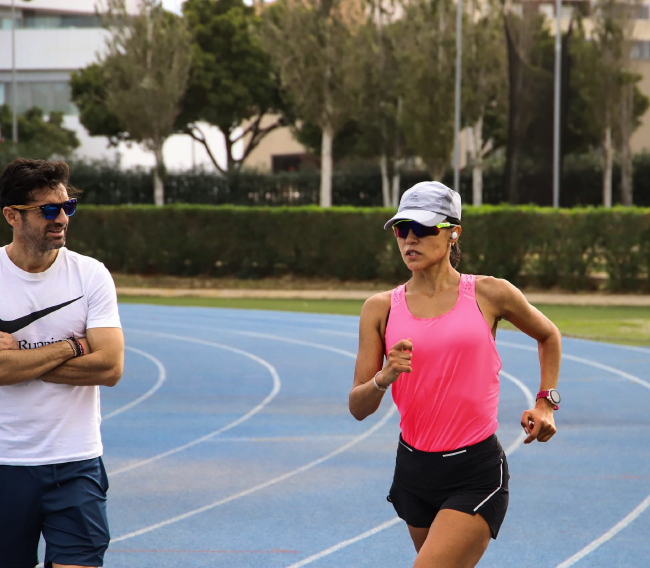
For me, being a coach is about continuing as a former athlete, remaining competitive from the "sidelines" and being able to train and develop everything I learned as an athlete.

My experience of more than 15 years as a high-level athlete, achieving among other important accomplishments an Olympic medal, has led me to learn a lot as a coach and to continue improving with the athletes who train with me, to better understand them and help them achieve the goals we set for ourselves.
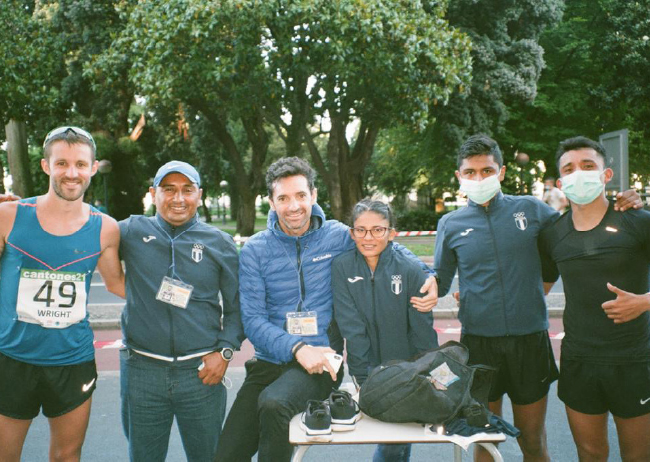

We never stop learning to be the best, on and off the track.

After all these years as a coach since 2010, and having been able to train athletes like my friend Robert Heffernan, World Champion and Olympic bronze medalist in the 50km at London 2012, to Guatemalan Erick Barrondo, Olympic silver medalist in the 20km at London 2012, to athletes like Ecuadorian Johana Ordóñez, Champion of the Lima 2019 Pan American Games in the 50km, to name just a few of the most representative in their countries, I've realized that the athletes themselves provide the learning, and that we never stop learning in order to be the best both on and off the track.

For me, being a coach is a continuation of being a former athlete, a way to develop and teach everything I learned as an athlete. To do this, you have to understand and refine every detail with the athlete you're coaching. And yes, experience is invaluable, and it always helps!

We never stop learning to be the best, on and off the track.

After all these years as a coach since 2010, and having been able to train athletes like my friend Robert Heffernan, World Champion and Olympic bronze medalist in the 50km at London 2012, to Guatemalan Erick Barrondo, Olympic silver medalist in the 20km at London 2012, to athletes like Ecuadorian Johana Ordóñez, Champion of the Lima 2019 Pan American Games in the 50km, to name just a few of the most representative in their countries, I've realized that the athletes themselves provide the learning, and that we never stop learning in order to be the best both on and off the track.

For me, being a coach is a continuation of being a former athlete, a way to develop and teach everything I learned as an athlete. To do this, you have to understand and refine every detail with the athlete you're coaching. And yes, experience is invaluable, and it always helps!